


Lieutenant
Lalonde
William Joseph
Canadian CANLoan Office attached to
The Queen's Royal Regiment (Wiltshire Infantry)

1st Lieutenant William Joseph Lalonde was born in Brooklyn, New York on 14 August 1916 to Joseph Albert Lalonde and Mary Fox Lalonde.
The family moved to Montreal, Quebec, Canada to rejoin family living there. Subsequently, young William grew up with his sister, Vivian, two years his junior and the two were very close.
Joseph passed away in 1923 in Montreal, leaving Mary to raise her two children. William at just 7 years old assumed to position of helping his mother and sister.
William was a good student and quite athletic. He was of medium build with a dark complexion, brown hair and blue eyes. He spoke, could read and write both English and French. His interests included reading, that, mostly being history, periodicals, and novels. He was fascinated with mechanics. He participated in sports such as softball, hockey, skiing and cross-country running.
He finished 11 ½ years in standard school, then two years in trade school, completing a course as a Stenographer.
He initially went to work managing a soda fountain, then in his Uncle’s Insurance business as a bookkeeper, and eventually as a route salesman/truck driver for the Coca-Cola Bottling Company of Montreal. His enlistment papers state his desire to go back to work for Coca-Cola after he’d finished his military service.

With his varied work, balancing his interests, he allowed his family to get by quite a bit easier. William exhibited responsibility characteristics enviable of boys his age.
Military Service: Canada
On 3 September 1940, William volunteered for military service in Montreal, joining the Victoria Rifles as an Infantryman. He signed up at the Headquarters Company and began his service in the Army, knowing that war was looming in Europe.
William initially was sent for basic and advanced training to Victoria, British Columbia, where he trained for and was given the military occupation as a truck driver - most likely because of his civilian employment. His driving and mechanic courses were completed at Woodstock, Ontario, then took and completed an Assistant Instructor’s Course at Aldershot, Nova Scotia.
Upon completion of individual training, he was a military truck driver/mechanic.
He later qualified as a tracked vehicle and motor cycle driver as well.
Naturally, first and foremost, he was an Infantryman and trained in all aspects of Infantry soldier skills.
In April 1943, he completed Chemical Warfare classes at CMGTC, Three Rivers, Quebec. Lalonde worked his way up through the ranks and was promoted to Corporal on 6 March 1943. He was noted to be a good platoon Corporal.
His superiors in the Regiment saw fit to recommend him for Officer Selection Appraisal Centre on 6 June 1943. The 4-week school was located in Aldershot, Nova Scotia.
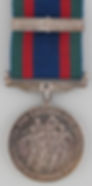
Cadet Lalonde was commissioned as a 2nd Lieutenant (Infantry) on 11 September 1943, then promoted to full Lieutenant on 16 October 1943. During this time, the Lieutenant also qualified and was awarded the Canadian Volunteer Service Medal with Maple Leaf.
Upon further training with the Victoria Rifles, the Regiment prepared to ship out to England, where the preparations for combat would begin in earnest. The Officers and Enlisted men in the Victoria Rifles knew, beyond a shadow of a doubt, that the Regiment would participate in the liberation of Europe.
Arrival and Transfer:
Assigned as a CANLoan Officer to British Army
Upon arrival in the United Kingdom on 8 April 1944, Lieutenant Lalonde, as part of the CANLoan program, transferred to 1/7 Queen’s Royal Regiment (West Surrey), 131st (Queen’s) Infantry Brigade on 10 April 1944.

Subsequently, within the QRR, he, along with two other Canadian Lieutenants were assigned with The Wiltshire Infantry to replace officers lost by the unit previously in the war. The new officers were introduced to the commanders and units each were assigned to.
During this time, the troops trained, played sports, were given short 1-3-day leaves and even had a parade, complete with the regimental band. Close order drills, unit discipline and the study of very detailed sand tables were studied by the newcomers.
Veteran British Officers, including the regimental commander, briefed them on what exactly it was they would be facing in the coming months. (While the troops knew they were there to participate in the invasion of Europe, no great detail was given to them regarding where and when).
Throughout the remainder of April and late into May of 1944, with the exception of a few passes issued here and there, the troops trained and trained hard. The men, officers and enlisted alike trained in their respective disciplines, and though never confirmed, Lt. Lalonde may have also trained on the use of artillery or anti-aircraft artillery.
The officers trained very similarly back in Canada, however, the British Army had their idea of leadership the new Lieutenants would have to learn and put into practice prior to the invasion.
Full field kit was a daily load each man must carry, along with whatever weapon they were assigned to carry.
Lieutenant Lalonde most likely was issued the Lee-Enfield Number 4 .303 caliber Rifle as most British and Canadian officer would carry. Bolt operated, this rifle and it’s variations had been in service since the 1880’s. (Although a lot of officers were only issued a sidearm).

Sidearms ranged from the outdated Webley Mk.VI .455. The Webley Mk. VI was introduced in 1915 to replace models dating back1887. It was a reliable, top breaking weapon firing the powerful .455 Webley Cartridge, the most powerful military sidearm, and was a favorite of the older officers. It remained in service until the 1960’s.

Smith & Wesson .38/200 Mk. I was another popular British Officer’s Sidearm. The revolver was also a top open weapon that fired the .38 caliber Smith & Wesson cartridge with a 200 grain bullet. The pistol was a replacement for the much bulkier and older Webley Mk. VI, which, due to its powerful cartridge was difficult for some to control. The 38/200 is still in use by some police forces around the world, but phased out of the military.

Browning Hi-Power (Pistol #2, Mk. 1/1). Chambered in the potent 9mm Parabellum cartridge was a high capacity weapon, carrying 13-14 rounds, which was a selling point for the military. Canadian Officers were often issued the Browning. Interestingly enough, Browning’s’ were initially manufactured at Fabrique Nationál in Liege, Belgium, and after the German invasion of Belgium, the factory was forced/required to produce the Hi-Power for German troops. They were a favorite with the Fallschirmjäger (Paratroopers). John Browning a gun making legend, invented first the Colt 1911, and utilized similar features to invent the Hi-Power, initially for the French Military utilizing the specifications they demanded. The Hi-power is still a popular shooting sport weapon. |  |
 | The Colt M-1911 or 1911A1 .45 ACP (Automatic Colt Pistol) Cartridge. The 1911 was initially perfected through a series of different variations beginning in the 1890’s. During the Philippine-American War, 1899-1902, fierce close quarters jungle fighting was encountered. The American forces had been issued the Colt 1892 revolver chambered in .38 Long Colt, which proved ineffective, as the round lacked stopping power. The U.S. Military reverted to the Colt 1873 chambered in .45 Long Colt, a powerful cartridge that provided the stopping power desired in combat. Browning and Colt worked together, invented the .45 ACP (Automatic Colt Pistol) and Browning built the colt 1908 around this cartridge to meet the requirements set forth by the U.S. Military. The .45 ACP cartridge, while not quite as powerful as the .45 Long Colt, was a man-stopper! In trials, the weapon was reliable, durable and the .45 caliber was a must for military applications. The weapon was the standard sidearm of mostly all U.S. forces until being phased out and replaced by the Beretta M-9 9mm pistol in the 1980’s. With that said, U.S. forces found the 9mm inadequate in combat, and many of the front-line soldiers and Marines went back to the 1911A1, and the Beretta has been sidelined. U.S. forces currently are issued various sidearms, but the 1911A1 is still a current issued weapon. |
Regardless, they would have qualified with their individual weapon, and spent plenty of time at the rifle and pistol ranges to become very proficient. The sidearms issue to British Officers would have depended mainly on what was available in the unit armory supply.
Day of Days: D-Day, The Invasion of Europe:
Lt. Lalonde and the entire QRR (Queen’s Royal Regiment boarded 3 troop transport ships, one British the other 2 belonging to Denmark and Belgium for the crossing to France. The ships, harbored in the Tilbury Docks, and remained in the Thames Estuary prior to setting sail for France.
Once off the French Coastline, the waterproofed vehicles and men loaded on to L.C.A.’s (Landing Craft Assault) for the landing operation at the designated area of La Riviere. Once the unit was assembled, it moved inland to Pouligny, where organized, orders given, and the unit’s combat journey began.

Placed under the command of 2nd Army, commanded by Lieutenant-General Miles Dempsey, folded into VIII Corps, commanded by Firebrand General Sir Richard Nugent O’Conner, and further attached to 11th Armored under the command of Major General George Philip Bradley "Pip" Roberts, designated “O” Group, their orders were to move south through Bayeux with the objective of taking Villers-Bocage.

Their mission was to staunch the incoming Germans who Hitler has insisted reinforce the Pas-de-Calais where Hitler was convinced the allies would land. Despite the advice and tactical experience of seasoned combat generals such as the highly regarded and decorated Generalfeldmarchalls Günter Adolf Ferdinand von Kluge, Karl Rudolph Gerd von Rundstedt and the most outspoken Johannes Erwin Eugen Rommel, who begged Hitler to allow him to move armored forces to reserve in the Pas-de-Calais, to heavy available fast-moving armor ready at a moment’s notice to thwart the allied invasion. Rommel, “The Desert Fox”, was an intelligent man and officer that had been very successful in North Africa and throughout Germany’s Mediterranean Campaigns.

Hitler dismissed the advice of Rommel and his other Commanders. (Hitler had been a decorated soldier in the First World War, but felt he had a better tactical mind than all of his officers combined). *On the morning of D-Day, Hitler was basically in a drug induced stupor, sleeping soundly with his general staff in Berlin afraid to wake him. Upon waking and told of the invasion, Hitler was jubilant, proclaiming, “I welcome them so we can finally defeat them”.
Several days later, Hitler allowed units in the Pas-de-Calais to be released to meet the Allies. Von Kluge replaced Rommel in Normandy after Rommel was wounded in an air attack in July 1944.
The QRR battled fiercely in their southward movement, suffering high casualties against the German armor, SS Troops and Hitlerjügen forces it encountered.
Early in July, the QRR and the rest were tactically withdrawn to resupply, receive and train replacements and rearm. The regiment had suffered heavy casualties during their initial combat.
They spent most of July training and preparing for the upcoming ‘Operation Bluecoat’, an operation that would prove quite costly for both sides.
Operation bluecoat: 30 July-7 August 1944
With the stalemate around Caen still in full swing, A D-Day objective the Germans were not willing to give up, and the Americans advancing rapidly to the west, the Allied High Command planned out an operation that would distract the German forces still vying to retake Caen and push west.
Hitler had ordered von Kluge to pull his armored divisions from the fray to cut off the Americans in the Cotentin Peninsula. This would have also cut off the Allies at the coastline where resupply operations were vital.
Field Marshall Sir Bernard Law Montgomery ordered Lieutenant General Miles Dempsey to mobilize VIII and XXX Corps, push inland to distract, as well as destroy, as many as possible German units in the area. Their objectives were to take the major cross roads at Vire, and the high ground of Mont Picon.
Operation Bluecoat was organized.

VIII Corps, including the QRR moved out on 30 July heading south through Bayeux and into the Normandy countryside. This ground had previously been seen by VIII Corps, however, this time there were more German units whose Pioneers (Engineers) had heavily mined and fortified many positions previously held. They had been moved from their previous encountered positions, and in many cases, to better locations.
VIII Corps faced fierce, veteran German forces. Multiple SS Panzer units, Hitlerjügen, Fallshirmjäger (Paratroops) and Heer units. There were many more anti-tank units and Panzergrenadier (Mechanized Infantry) units with the addition of the greatly feared Tiger and Köenigtigre (King Tiger) tanks deployed that had not been in the area when the Corps had ventured in the area prior.
British and Canadian units poured into the area, both armored and infantry. Aerial superiority was with the Allies, but the Luftwaffe (German Air Force), still had fighter bombers, usually swiftly dealt with by Allied aircraft.
The Germans organized to face the Allies and fierce fighting, combined with mined roads, the Bocage or hedgerow country, and the increased amount of armor made the going slow and dangerous.
The Germans had a couple of slight advantages, such as they had occupied France for 4 years prior and knew the area, and their armor was superior to those of the Allies. The disadvantages the Germans faced were mainly with their armor. The Tiger series of tanks were enormous, 60 tons and more, designed for the open plains in Russia, and prone to mechanical failure. Normandy was full of narrow farm lanes and hedgerows their armor had difficulty negotiating, and in the small towns, the Allied armor had the ability to out maneuver and contain the German tanks to destroy them.

Allied 75mm tank armament was no match for the thick armor plating on the German tanks or out range the German tank/Anti-Tank guns. However, the Allies had numbers, speed, and exhibited grit and determination to defeat the Germans. The advantage held by the Allies also included the Royal Artillery (Arguably the best in the world at that time), and the M-10 Self-Propelled Anti-Tank armored vehicles, which were not impervious to fire, but could easily defeat German armor at distance.
As the VIII Corps moved inland, XXX Corps was supposed to cover their east flank. XXX Corps lagged from the outset, siting one problem after another as VIII Corps took the brunt of the battle. (To this day, both sides’ histories will tell the opposite. With that as it may, by August, the commander and high staff of XXX Corps were sacked and replaced).
1/7th Bn. The Queen’s Royal Regiment (West Surrey) War Diary 1st August 1944
Area LA PAUMERIE. 0600 hrs. Bn. still at LA PAUMERIE X rds. 1300 hrs. Bn. moves to conc. area ECORIGNY. C.O. & I.O. go to 1/5th & 1/6th Queen’s at CAHAGNES. This is in ruins and still smouldering from attack by our aircraft. Little enemy arty. activity.
Bn. stops in area for the night.
2330 hrs. Raid by e/a. A/P bombs dropped locally but not in Bn. area.
Among both sides, there really was no front line, troops were intermingled with enemy to the front, rear and sides, lack of good communication, and in most cases, no communication between armored units and the infantry serving with them.
Friendly fire due to mistaken identification of the troops, and lack of a good knowledge of each-others troops cost lives on both sides.
German High Command under von Kluge were following the commands from Der Führer (Hitler), and even as they saw their units being decimated and way above acceptable losses of personnel and equipment, they feared reprisal if they elected to tell Hitler how bad things were.
1/7th Bn. The Queen’s Royal Regiment (West Surrey) War Diary 2nd August 1944
0630 hrs. Bn. moves to area 7355 S.E.
1400 hrs. 90 enemy Inf. reported in LA RIVIERE 7456. ‘A’ Coy patrol to LOCQUEVILLE and find it clear. ‘B’ Coy push fwd. to LA RIVIERE with Mortar Pln. & Sqn. 5 R.T.R. in sp. 34 POW’s and LA RIVIERE cleared.
1600 hrs. Press correspondent visits Bn. HQ and has conversation with the C.O. which we later hear quoted on the wireless news.
1700 hrs. ‘A’ Coy go fwd. with R.T.R. to area 772526.
2000 hrs. Tks. attack high ground at 7752. Remainder of Bn. remains in present area.
Bn. area shelled spasmodically during the night. A few casualties from ‘D’ Coy. No e/a activity noted. 6 O.R’s wounded.
The Allies slugged it out back and forth with the Germans, one day one side would seem the victor, and the next day would bring the opposite. Confusion on both sides abounded.
Artillery barrages dogged both sides, sleep deprivation, disruptions in supplies and fierce, sometimes close quarters, hand-to-hand fighting, wore down both friend and foe alike.
Lt. William Joseph Lalonde, Queen’s Royal Regiment Canloan Officer
KIA 3 August 1944
AT 1600 hours the afternoon of 3 August 1944, in the area of Aunay-sur-Odon, Lt. Lalonde was killed outright in a blistering artillery barrage, inflicted by the “Moaning Minnie’s” as they were called.
The Nebelfürfer was a feared terror inflicting mortar type rocket that made a horrific screaming sound as it came in.
Lt. Lalonde was one of the 35 men killed that day in Aunay-sur-Odon. He, and the others were buried in a temporary cemetery, according to graves registration files, slightly southeast of Engerville, map reference 7F/S 778537.
After hostilities ceased and victory was achieved in Europe, the Lieutenant, and his countrymen were disinterred and given a proper military cemetery with full Military Honors. The lands for these fields of honor donated by a grateful France for the men that sacrificed it all on their behalf.
Lt. Lalonde lies in rest at the Bretteville-sur-Laize Canadian Military Cemetery.

1/7th Bn. The Queen’s Royal Regiment (West Surrey) War Diary 3rd August 1944
0530 hrs. C.O. holds ‘O’ Gp. Bn. is to attack and capture wood & high ground area 7753. ‘C’ & ‘D; Coys will lead on RIGHT and LEFT respectively. ‘A’ & ‘C’ Coys in reserve. Inf. & Tks. co-operate.
0600 hrs. Bn. starts to move up to AA area 769527. 0700 hrs. Tac HQ established in house at 769527. 0830 hrs. ‘C’ & ‘D’ Coys cross SL preceded by 4.2” Mortars support. ‘C’ & ‘D’ Coys & Tks. report on objective. ‘B’ Coy moves up to conform on RIGHT of ‘D’ Coy & clear wood 7853. Bn. settles in posns. gained. ‘A’ Coy remains well in reserve. Heavy shelling and mortaring of Bn. area during all day.
1600 hrs. Lt. W.G. LALONDE killed by shellfire. Lt. D.R. ANDERSON and Lt. J.E. CATLEY wounded. 2100 hrs. C.O. holds ‘O’ Gp. 1/6th Queen’s have been very severely mauled at Pt. 188 7951. 1/7th Queen’s to establish firm base in area of sq. 7852 and hold firm base at all costs.
2130 hrs. Bn. starts move. Caught in Nebelwerfer stonk. Approx. 35 cas. Bn. HQ area included. 1 half track and 3 jeeps damaged.
2230 hrs. The Carriers that are covering the occupation of the posn. bump Tks. and Inf. at 787527. Gallant resistance is made by them and they hold them off. Casualties I killed 2 wounded.

By 7 August 1944, the German defense of the area crumbled and withdrew. Allied objectives were obtained, the American forces took Vire and united with the British allies, pushing the remaining German forces into what would come to be known as the Falaise Gap.
The cost to the Allied British forces in this operation were high, but not as high a price as the Germans would pay defending the area.
***Author’s Note***
"As an amateur military enthusiast, I have researched American Soldiers and Sailors from the American Civil War and forward for decades. That research, I have contributed to several publications, websites, and of course, the families of those I have researched. This is a very worthwhile and enjoyable “hobby” for me.
Recently, I helped to research an American USAAF Lieutenant, and met Richard Grayling of the D-Day Stripes Facebook Page and Grayling Media website. Richard, who lives in the UK, got me very interested in the struggle of our American Allies during WWII. I befriended Richard and help to proof-read a lot of his stories, and thus began to pay attention to the British/Commonwealth aspects of the Normandy Invasion.
Through reading about Operation Bluecoat, I became aware of the Canadian CANLoan Officers that were being transferred into the British ranks, along with Canadian enlisted men, to help refill the shortages the British men that had been lost due to 4 years of fighting the Germans.
Lieutenant Lalonde came into my searching, and his story appealed to me. With the great help and support of Richard Grayling and his introducing me to Cas of the CANLoan Remembrance Project, whom with out’s invaluable information could have made this story possible".
Robert Houston, August 2025 Special Mention for Normandy War Guide whose maps are invaluable when trying to trace allied movements in Normandy. Also to the Queens Royal Regiment site who host the War Diaries for WW2.
More information about Allied forces around Vire during Operation Bluecoat can be found here


