

OCTOBER 7th 1944: Operation Fraternise: A Declassified 1st KOSB in 1944 Battle Plan

Updated: Aug 8
On 7 October 1944, the 1st Battalion King's Own Scottish Borderers discussed orders for Operation Fraternise — a planned assault on a heavily defended wood using Churchill tanks, Flail tanks, AVREs and 58 armoured carriers. The operation was ultimately cancelled, but the original Top Secret operational order survives, providing a rare and detailed insight into how a battalion-level attack was planned and coordinated in the latter stages of the Normandy campaign.
1st KOSB War Diary 7th October 1944
Bn 'O' Gp Conference and Discussion on Op 'FRATERNISE' with cloth model.
Appendix D. Plan for 'Operation Fraternise'
OP FRATERNISE
TOP SECRET Copy No. 417 Oct 44
1. Object
To secure a bn locality, inside a heavily defended wood, for use as a firm base for further offensive ops.
2. Resources available for op
One Bn Inf
One sqn plus two tps Churchill Tks
One sqn Flail Tks
58 Armd Carriers, each carrier carries 10 men in addition to crew.
3. Sp available for op
(a) Air
Bombing of fwd edge of wood from H – 60 mins to H. Splinter bombing of enemy localities in rear of fwd edge of wood. Incendiary bombs on wood in rear of fwd edge.
(b) Arty (Artillery)
From H – 30 mins to H shelling of fwd edge of wood.From H to H plus 15 barrage stands on opening line.From H + 15 barrage moves at 200x every 3 mins. with with tones on selected targets (handwritten annotation)
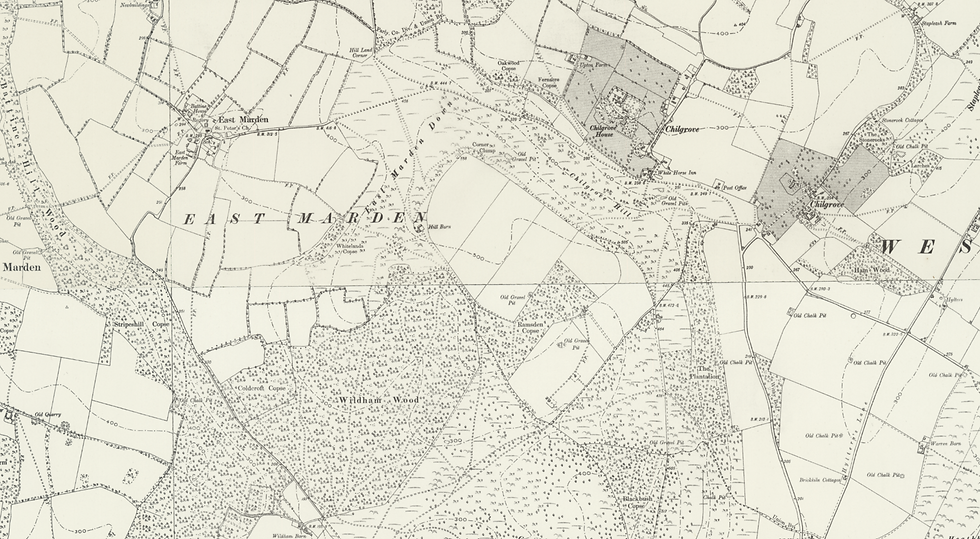
MAP

4. Timing
H hour will be the time at which last air bomb falls and time at which attacking tps cross S.L.
5. Pln Definitions (heading amended in original)
(a) Concentration area – Place where Bn concentrates some days before the op.
(b) Assembly area – Place where the inf, tks, armd carriers and other sp arms "marry up" prior to moving to the F.U.P.
(c) F.U.P. – Place where the whole force deploys into Battle Formation.
6. Deployment of Force
(a) 21C takes forward the following guides and lays out first the assembly area then the F.U.P.
(i) For Assembly Area – RSM (Rifle — handwritten annotation)
Two guides per Coy
Two " for Bn HQ
Two " per Pl from B Coy
Two " from tks
Two " " Flails
Two " " A.V.R.Es.
One guide will remain, the other will return to the concentration area to load up his sub unit.
(ii) For F.U.P. – Coy 2ICs
Pl Sgts
Two guides from Bn HQ
One guide from Bn HQ for Sp Gp
Two guides from Carrier Pl
Two " " A.Tk Pl.
Each pl Sgt will bring a small notice board in Coy colour with the number of the pl printed on it. After placing the boards they will return to the assembly area to load up their pls.
Move
(i) Tps will move into the assembly area in the following order:
Tks
Flails
Armd Tp Carriers
Inf
The inf will mount as soon as they arrive in the assembly area.
(ii) The move from the assembly area to the F.U.P. will be by two routes which will be marked by the 'I' Sec. All tps will deploy on reaching the F.U.P. straight into their correct posns. The layout is shown at Appx A.
7. The Advance
(a) Timings
Time | Action | Echelon |
H | Leading tps of the tk sqn cross S.L. | 1st Ech |
H + 3 | Flail tks cross S.L. | 1st Ech |
H + 9 | Leading tps of inf coys cross S.L. | 2nd Ech |
H + 20 | Tac HQ Gp cross S.L. | |
H + 20 | Leading tps of rear inf coys cross S.L. | 3rd Ech |
H + 25 | Sp Gp crosses S.L. | 4th Ech |
(b) Speed Best tk speed (approx 100 yds a min)
(c) Signal to adv Visual.
(d) Navigation Visual. Coloured smoke and air burst over objective.
8. The Assault
Leading sqn tks occupy fire posns short of fwd edge of wood to shoot in leading inf coys. Spray tree tops.
Leading inf coys in armd carriers proceed into wood to max depth to which armd carriers can penetrate up to limit of coy objective.
Leading coys immediately debus and seize respective objectives.
Leading sqn tks ceases to fire frontally once leading inf coys reach fwd edge of wood, but continues to neutralise flanks of penetration until ordered to rally. (This will NOT be until bn has est a firm base)
Rear inf coys follow leading inf coys and debus if possible, just inside the wood. Coys then seize respective objectives.
Tac HQ Gp and Sp Gp move to pre-determined locality.
On capture of objectives, tps will dig in and coys will patrol to pre-determined patrol line.
9. Allotment of Armd Carriers
Total | ||
(a) Each Leading Coy | 13 | 26 |
(b) Tac HQ Gp | 4 | 4 |
(c) Each rear Coy | 13 | 26 |
(d) Sp Gp | 2 | 2 |
58 |
10. Composition of Coys (Companies)
(a) Rifle Coys. Not limited(b) Coy HQ. " " as per WE(c) Tac HQ:
Armd Tp Carrier 1.
CO
Sig Offr
2 Ops (loaned) (two 19 sets)
2 Regtl Sigs (18 set)
'I' Sgt
Armd Tp Carrier 2.
IO (loaned — handwritten annotation)
1 Op (19 Set)
2 Regtl Sigs (18 Set)
2 Runners
2 SDs
2 'I' Sec.
Armd Tp Carrier 3.
1 R.E. Offr
7 R.Es (struck through, amended - Royal Engineers)
Armd Tp Carrier 4.
5 R.Es
4 Pnr Sec (handwritten annotation - Pioneer Section *for mine laying/sweeping)
CO's Carrier
1 Driver
1 Batman
1 Op (Bde) 22 Set
MO's Half-track (medical staff)
MO
2 SBs
1 driver
Padre
(d) Sp Gp: (Support group)
Armd Tp Carrier 5.
2nd-in-Comd
Adjt
1 Op (loaned — handwritten annotation) (19 Set)
1 Clerk
2 Batman
2 Regtl Sigs (18 Set)
RSM
Armd Tp Carrier 6.
10 Pnrs
Sigs M.14 (Tn)
1 Dvr
3 Sigs
Two secs Carriers (with some res SAA)One Sec Atk PlCoy Carriers
(e) 'F' Ech
M.14 Bde Sigs – OC HQ Coy
1 Dvr
1 Op
1 Clerk
remainder normal.

11. Eqpt to be carried by inf Coys
(a) All personal weapons(b) Two bandoliers per man(c) One box Carton SAA per pl(d) PIATs and 2" Mortars to be carried(e) Respirators NOT to be carried(f) Small packs to be carried, with haversack ration(g) Pick or shovel per man to be carried.
Note: Additional amn will be brought fwd in coy carriers.

12. Comms
Pl to Coy HQ – by 38 Set and runner when on objective.Coy HQ to Tac Bn HQ – by 18 Set and during adv, by 19 Set.Tac Bn HQ to Bde – by 22 Set in carrier and by 19 Set in armd carriers.Tac Bn HQ to Tk sqn – by IO with 19 Set on 'B' Set.2IC – 19 Set in Armd carrier'F' Ech – 22 Set in Bde M.14
13. Tpt
All other 'F' Ech tpt not referred to above will NOT move fwd from assembly area until called for.
*** What Operation Fraternise Tells Us
The scale of the force assembled for Operation Fraternise is striking — 58 armoured carriers alone, plus a squadron of Churchill tanks, Flail tanks, AVREs, and a full infantry battalion. This was no minor skirmish but a carefully choreographed all-arms assault, reflecting the hard lessons the British Army had learned about attacking well-defended woodland positions in the months since D-Day. The meticulous staging — concentration area, assembly area, Forward Assembly Point — and the precise H-hour timetable broken into four echelons reveals just how much coordination was required to move a battalion into action by late 1944.
Perhaps most revealing is what the document says about communications. The signals plan for Operation Fraternise operated across four distinct levels simultaneously. At the sharpest end, the No. 38 Set linked platoons to their company headquarters — a notoriously short-range and unreliable set that was essentially the limit of what an infantryman could carry into an assault.
Above that, the No. 18 Set connected company headquarters back to battalion, while the No. 19 Set — the workhorse of the British Army at this level — handled battalion to brigade communications and crucially provided the tank-to-infantry link, referred to in the document as the 'B' Set.
At the top of the chain, the No. 22 Set in the CO's carrier and the MO's half-track maintained communication upward to Division. Four different radio nets, all operating at once, across a force moving through a defended wood at 100 yards a minute — the signals coordination alone was a considerable feat.
That the operation was ultimately cancelled makes this document all the more historically interesting. The orders were written, copied to 41 recipients, and marked Top Secret — yet the assault never happened.
The war diary of the 1st KOSB records what came instead. For the men of the battalion who had already fought through 103 days in Normandy and beyond, Operation Fraternise represents one of the many actions that history never recorded — because it never took place. They remained in place in St Hubert for nearly a week before they moved off to Peelkant.
*We're still researching the actual target 'woods' they were planning to assault.

Comments